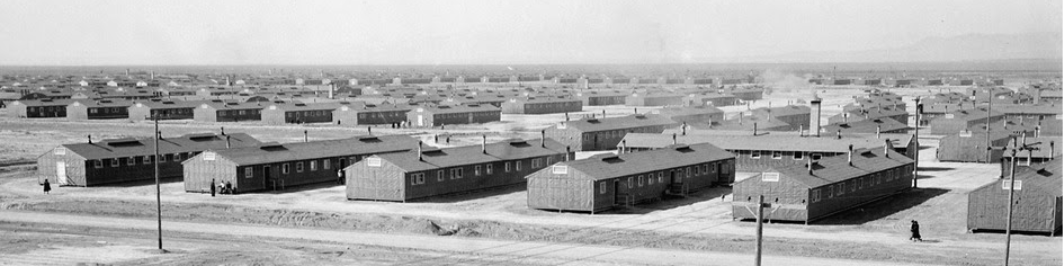
Following Executive Order 9066, our family was first imprisoned at Tanforan Assembly Center in the spring of 1942, then transferred to Topaz Relocation Center in Utah, where we stayed for a year.
In the spring of 1943, the U.S. government circulated the infamous “loyalty questionnaire.” To Questions 27 and 28 about willingness to serve in the Armed Forces and forswearing allegiance to the Emperor of Japan, my father answered “No” and “No.” But he also added a handwritten note: “This does not mean I am against America. I shall like to go to Japan to live with my parents and farm after the war.”

But wartime leaves no room for nuance. In September 1943, our family file was marked “T-S” (Transfer to segregation)–and we were sent to Tule Lake, the designated camp for those deemed “disloyal.”
My father was disillusioned by the way he had been treated by the country of his birth. Later in life, he often said, “They should have asked the questions before they placed us in the camps.”
Shortly afterward, my father was arrested by the FBI and sent to a Department of Justice prison at Ft. Lincoln in Bismarck, North Dakota.

