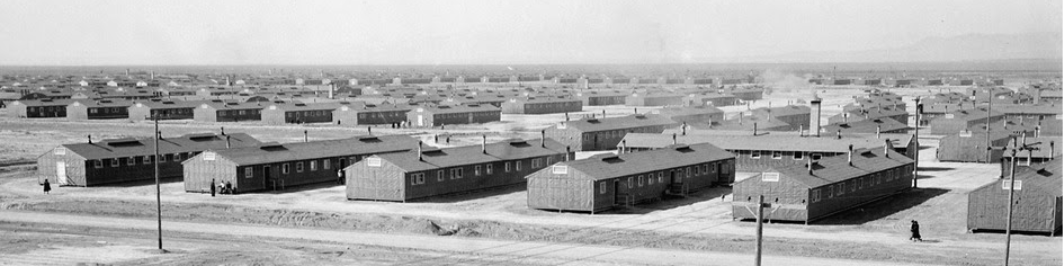
Yet Dad held onto his creative spirit. He took a circuitous path of jobs in the Midwest after his WRA release from Topaz that took him to places like Point Washington, WI; Madison; Chicago; and Milwaukee. Some jobs were unpaid, some provided on-the-job-training. Chance meetings led to a printing mill apprenticeship and an opportunity to present a portfolio to an industrial designer, who offered him an apprenticeship at his design firm. Meanwhile, he worked as a “house boy“ to survive. Whatever choices he made, they all seem to point towards his goal of working in something creative and artistic; something that fed his soul and kept him going against all the headwinds. Ganbatte.
Eventually, always wanting to return to the San Francisco Bay Area, he was able to land a job at Walter Landor & Associates, an industrial design firm in San Francisco.
Later, he was Dad. When people asked what he did, I replied, “Oh, he’s an industrial designer.” I said the words before knowing what that was as well as the story behind it. Last year, while visiting Washington, D.C., I saw some of his works listed in the Smithsonian. You make me proud, dad.

When I think back now as an artist, he must have seen a little of himself in me. I remember he mentioned CCAC to me when I knew nothing about it. Many parents would try and talk their kids out of going to art school–it’s so impractical—the starving artist. Yet he was different in his quiet way.

Looking back, his hopes and dreams have drifted in and out of my lifetime, and that spirit has sustained me.
About the contributor: Naomi Kubota Lee is a Sansei painter, fiber artist, and wabi sabi artist. During World War II, her family was incarcerated at Tanforan and Topaz. Naomi was born after the War in Redwood City, California. She grew up in Mill Valley, California; attended the University of California, Berkeley, where she wrote “Japanese American Redress Movement: Finishing a Chapter of American History” as her senior thesis (part of her archives); and was actively involved in the National Coalition for Redress and Reparations (NCRR) in the redress movement. You can view her artwork on her website: naomileegallery.com.
Copyright 2026, Naomi Kubota Lee. All rights reserved.
I am moved by how you were able to capture his life in such a concise and condensed way – recognizing his artistic soul and his influence on you.
This is a wonderful historical piece for the next generation…
Thank you for sharing remembrances of your Dad and yourself
Your article made me wish I could have spent time in the garden of your childhood. It sounds peaceful, special and beautiful. Thank you for sharing this history with one who didn’t have an artist as a parent, and didn’t get to enjoy both the beauty and the fruits of the labor.