by Dan Hirano
“…a simple chair set in the middle of a barren open space, unmistakable barrack in the dust as a backdrop, simple dark clothes for a chilly day.”

This photograph is of me on my dad’s knee in Topaz. Why it was taken is anyone’s guess, but I’m glad it was taken. It shows not only a man with his son, but it also portrays a landscape that is both harsh and bleak. Perhaps, it was done that way for a purpose—a simple chair set in the middle of a barren open space, unmistakable barrack in the dust as a backdrop, simple dark clothes for a chilly day. Every element basic, austere like Topaz life itself. Thank god for either the morning or setting sun casting its glow across the entire shot.
And look at my dad’s shoes. Those are not work shoes, those are Oxfords—cleanly polished and meant to be worn for an occasion. He must have been on his way to or coming back from somewhere special. Was it a meeting, or the doctor’s office, a funeral? Or was this his normal dress, because as a block manager, according to my brother, my dad had to often interact with his captors.
Well, he even cuffed the left leg of his pants high so we could see his fine shoes. The man was vain, vain just like his son.
About the contributor: Dan Hirano’s family was “relocated” from Berkeley to Tanforan, then Topaz, UT, where Dan was born in 1942. The Hiranos were one of the last families to leave Topaz in 1945 and settled in San Francisco’s Japantown, where they lived until moving to Berkeley in 1951. Dan received a Bachelor of Architecture degree from the University of Oregon and practiced as an architect until retirement. He has been happily married to Colleen Chun for 50 years.
Copyright 2018, Dan Hirano. All rights reserved.
DANIEL REALLY LIKED THIS STORY BECAUSE IT WAS INTRESTING
Glad you liked it, Daniel! I’ll tell Dan (who wrote the story and is the little boy in the picture).
how hard was it in topaz
Hi Jase,
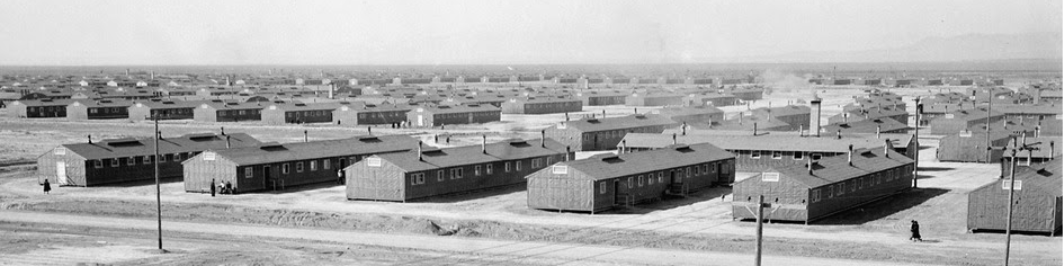
That question has many answers. For people (most from California), it was a big change to suddenly be living in the desert. Winters were very cold; summers were very hot. The barracks were hastily built and offered little protection from weather. There was no air conditioning in the summer, and the only heat in winter was one coal-burning stove. Dust storms were common. There was no privacy.
It was probably hardest for older people and mothers. Kids had school, so they made friends and found ways to amuse themselves. But the older people had lost their jobs, businesses, and homes; and they did not know what the future would be for them.
If any Topaz survivors see Jase’s question, please feel free to weigh in!
it was very hard since my father volunteered for the 442nd Regimental Combat Team and was fighting in Europe. My uncles worked to fill the gap but it wasn’t the same. My mother and I shared our tiny apartment and she used reading to lift our spirits. Grandma and grandpa would tell me stories like Momotaro, Peach Boy. I played with the kids on the block but had developed asthma from the frequent dust storms and struggle to breathe at times. Our happy times came when we could leave Topaz to pick apples and we were able to actually go to a swamp cooled theater to see a movie. We survived because of family and community.